
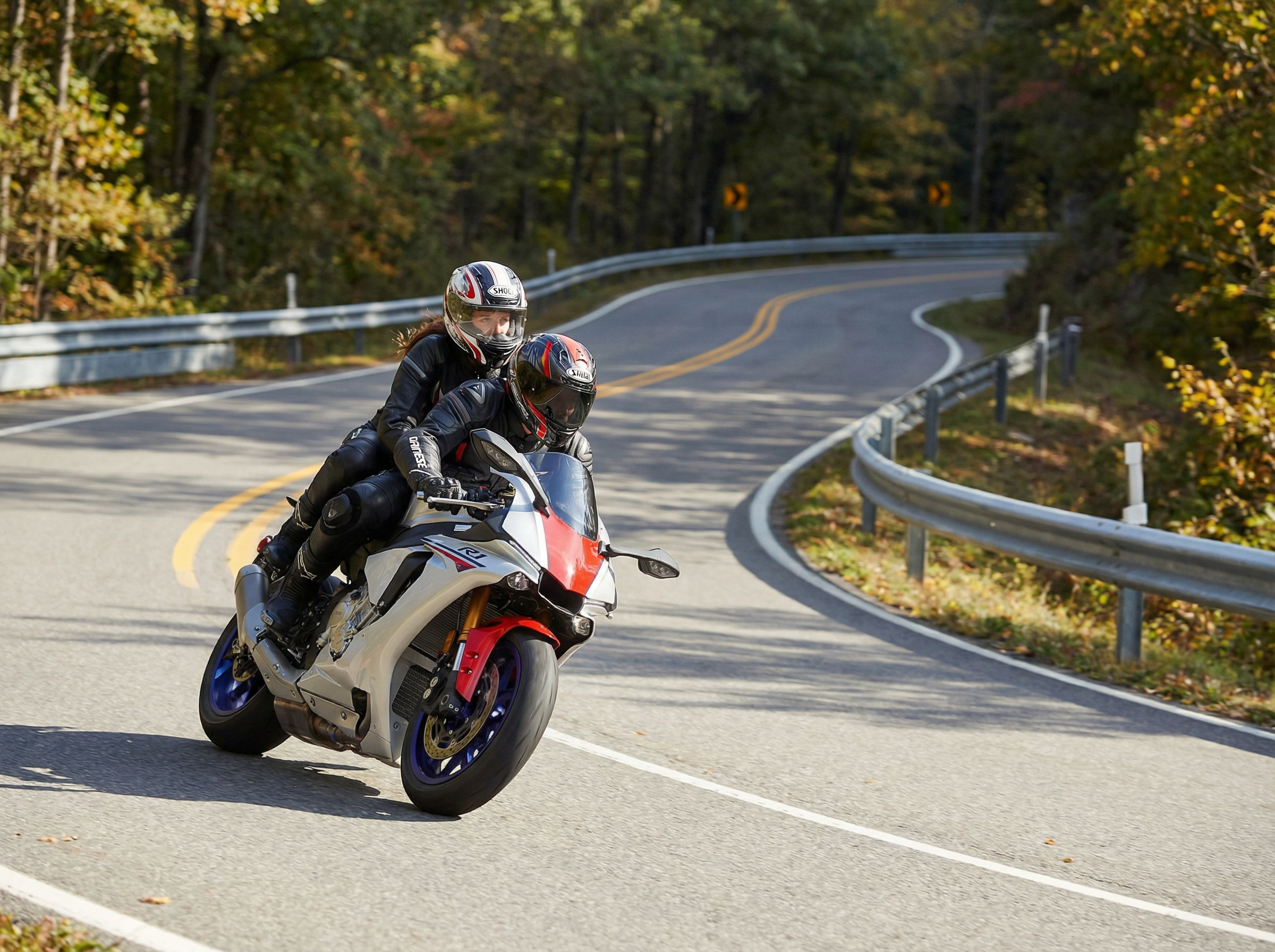
Passengers don’t always tell you when something’s wrong.
But their body language almost always does.
Here’s how to read it.
Sign #1: Excessive gripping
If your passenger:
- Death-grips your jacket
- Locks their arms
- Pulls themselves forward under braking
They’re not relaxed—they’re compensating.
Sign #2: Helmet bumps under braking
Helmet taps aren’t “normal.”
They usually mean:
- Passenger is sliding forward
- They can’t brace independently
- All braking force is going through you
This is one of the clearest signs something needs to change.
Sign #3: Stiff posture in corners
A comfortable passenger:
- Moves naturally with the bike
- Doesn’t fight lean angle
A tense passenger:
- Stays upright
- Overcorrects
- Feels disconnected from the bike
Sign #4: Fatigue after short rides
If your passenger feels tired after a short ride, it’s often not the seat—it’s upper-body strain from holding on improperly.
The simple fix most riders overlook
Comfort isn’t about padding or reassurance.
It’s about giving the passenger:
- A stable
- repeatable
- independent grip point
That’s why products like CC Grips exist—not to add complexity, but to remove uncertainty.
Final thought
A relaxed passenger makes you a better rider—without you changing anything.
Pay attention to the signs. The bike will feel different immediately.