
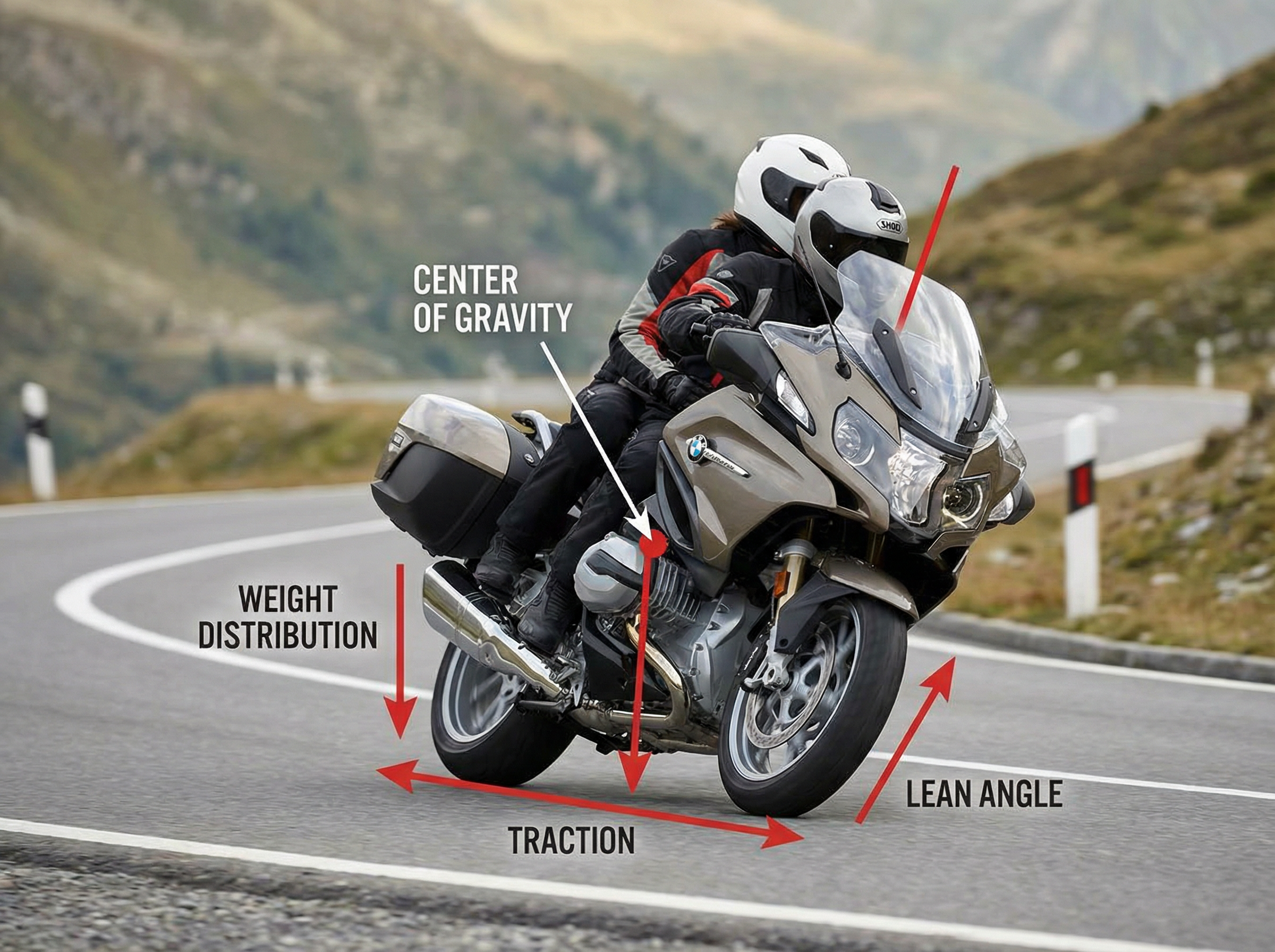
If you’ve ever ridden with a passenger and heard:
“Why does it feel like I’m flying into you every time you brake?”
…this article is for you.
Weight transfer explained (without the textbook)
On a motorcycle, braking shifts weight forward. Solo, you instinctively brace with:
- your legs
- your core
- your arms on the bars
A passenger doesn’t have that luxury.
When you add a second person:
- total mass increases
- braking force increases
- forward inertia doubles
The passenger’s body wants to keep moving forward—even when the bike is slowing down.
Why passengers slide forward
Most motorcycles (especially sportbikes and nakeds):
- have sloped seats
- lack forward grab points
- place the passenger higher than the rider
So during braking:
- gravity + inertia pull the passenger forward
- legs alone aren’t enough to brace
- the upper body searches for something to hold
That’s when they:
- grab the rider’s jacket
- clamp ribs
- pull shoulders
- or brace against your back unintentionally
Why grabbing the rider is a bad long-term solution
It works—but poorly.
Problems it creates:
- force goes into the rider’s body, not the bike
- sudden load through your spine
- inconsistent pressure on the bars
- delayed braking inputs
Over time, this leads to:
- reduced braking confidence
- jerky deceleration
- fatigue for both rider and passenger
The real fix: give inertia somewhere else to go
The solution isn’t “brake softer” or “tell the passenger to relax.”
It’s redirecting braking forces into a stable grip point that:
- stays in the same place every time
- lets the passenger brace independently
- doesn’t interfere with rider inputs
That’s where purpose-built passenger handles make a measurable difference—not just in comfort, but in control.