
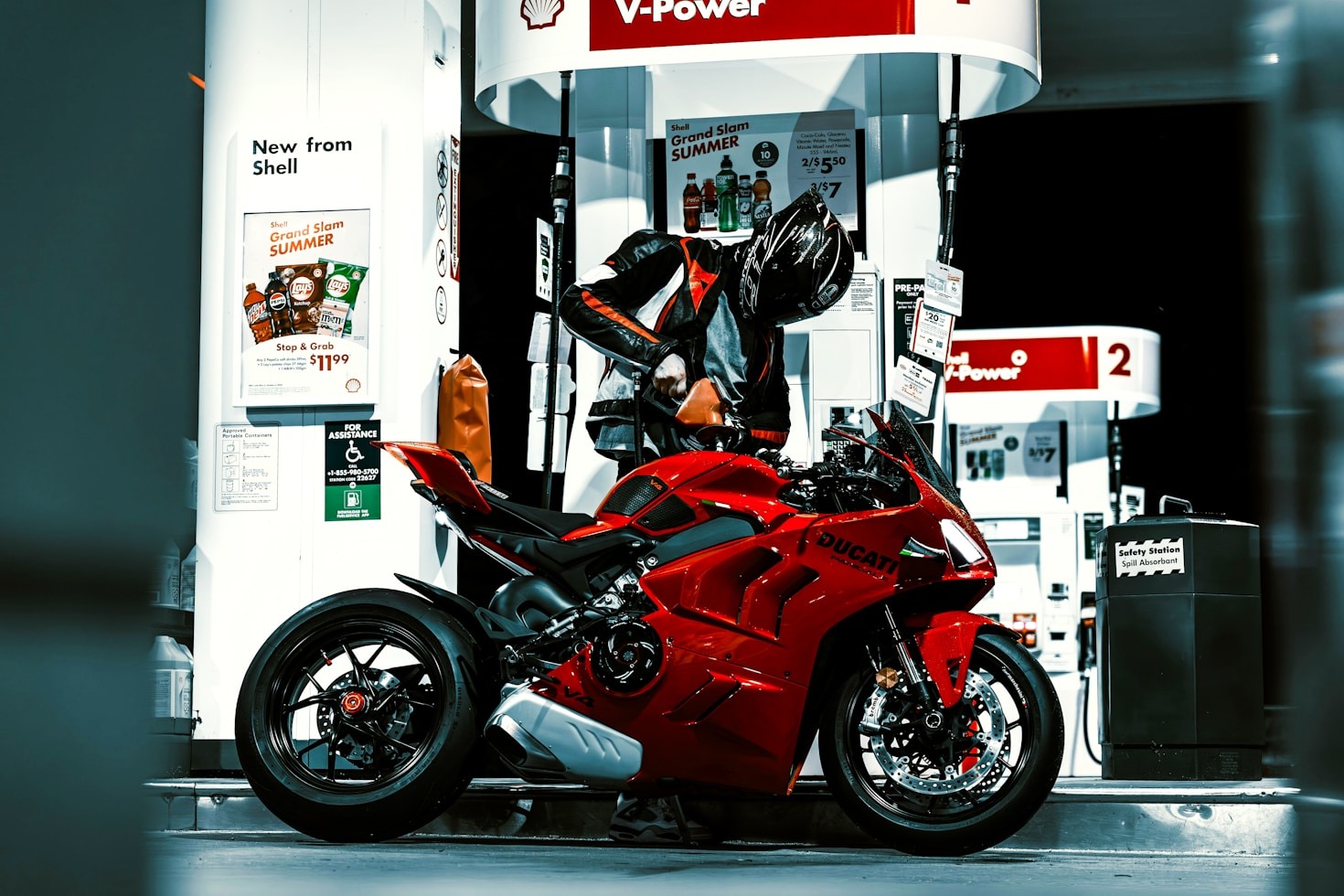
Sportbikes are designed for performance—not comfort.
So it’s no surprise that many passengers feel nervous, tense, or unstable on the back.
Let’s break down why this happens—and what actually helps.
1. Forward lean changes everything
On sportbikes, the rider leans forward aggressively.
For passengers, this means:
- Less vertical support
- More forward force under braking
- A constant feeling of “sliding into the rider”
Without a proper place to brace, the passenger instinctively grabs the rider—creating tension for both people.
2. High foot pegs = reduced leverage
Sportbike passenger pegs are:
- High
- Rear-set
- Often uncomfortable
This reduces the passenger’s ability to:
- Push through their legs
- Stabilize their upper body
- Absorb braking forces
Result: arms do all the work—and that leads to fatigue and insecurity.
3. No natural handholds
Unlike touring or adventure bikes, sportbikes usually offer:
- No rear grab rails
- No side handles
- No forward bracing points
So the passenger is left improvising—and improvisation is the enemy of confidence.
The real fix: stability, not reassurance
Telling a passenger to “just relax” doesn’t work if their body has nothing solid to rely on.
What does work:
- A predictable grip position
- Independent bracing (not pulling on the rider)
- Repeatable body posture every ride
That’s why solutions like CC Grips exist—not as accessories, but as confidence tools.
When passengers feel stable, fear disappears naturally.
Final thought
Most passengers don’t hate sportbikes.
They hate feeling out of control.
Fix the stability, and everything else follows.